

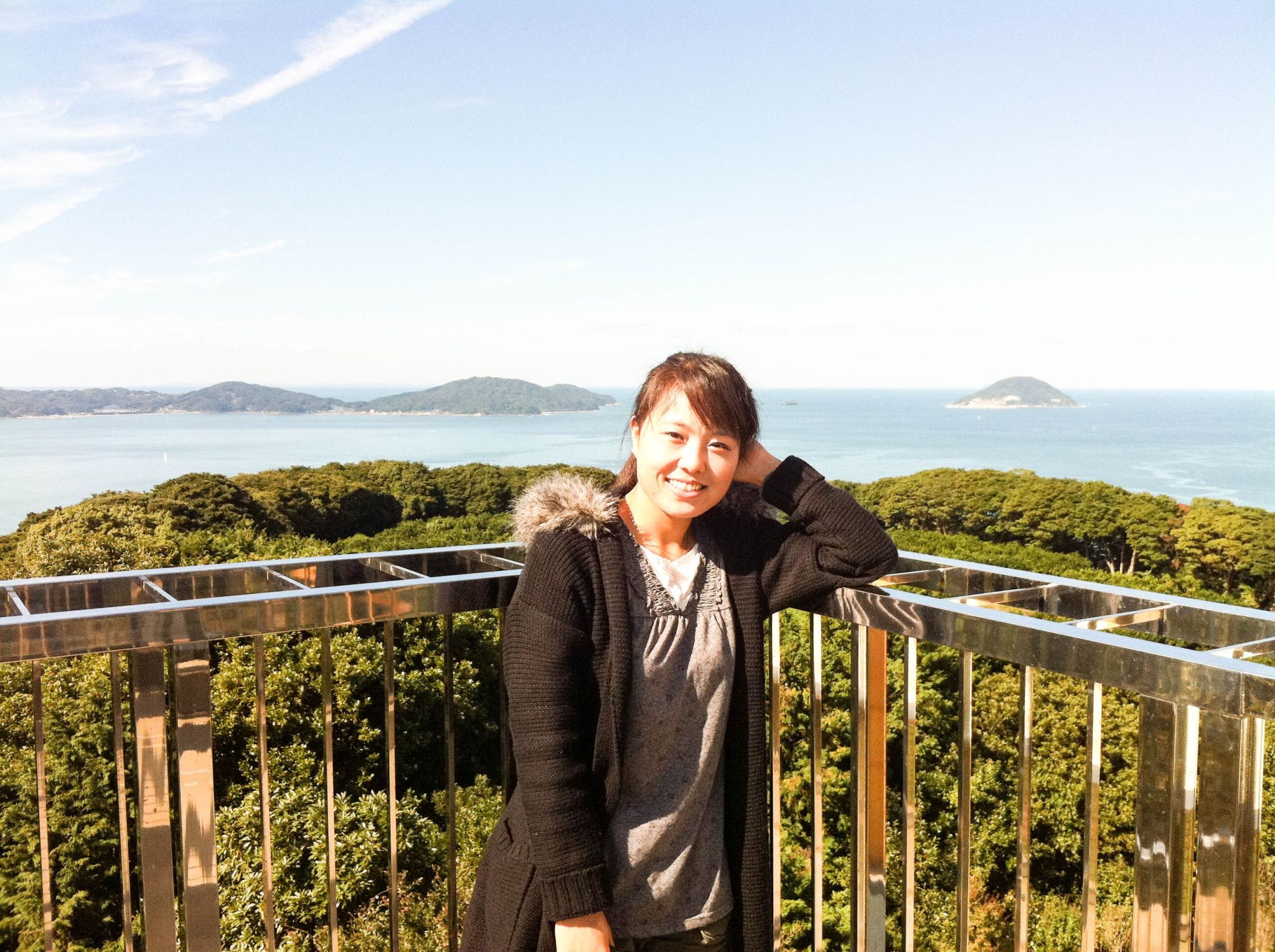
职称:副教授
职务:城乡规划系副主任
专业:城市规划与设计
人才计划:天津大学北洋青年骨干教师
邮箱:xiaoyan_mi@tju.edu.cn
教育背景:
2007年毕业于重庆大学,建筑学学士;
2010年毕业于重庆大学,建筑学硕士;
2015年毕业于九州大学,工学博士
专业履历:
2015-2016,日本九州大学人间环境学府学术研究员
2016-今,历任天津大学建筑学院讲师、副教授
课程教学:
《建筑设计》(城乡规划系本科生一、二年级)
《城市规划设计》(城乡规划系本科生三年级);
《毕业设计(论文)》(城乡规划系本科生五年级);
《场地设计》本科理论课程;
《城市研究与规划技术方法》本科实践课程;
《毕业设计实习》本科实践课程
《设计工作坊》本科实践课程;
《创新实践计划》本科实践课程
《区域统筹与协同发展》研究生理论课程
《Urban Geography》研究生全英文课程
《Urban Design Studio》研究生全英文课程
科研方向:
城市感知技术与社会空间研究
城市微观环境与公共空间健康
社区治理研究与基础设施规划
近期学术成果:
基金项目:
1. 天津市哲学社会科学规划一般项目“天津不同城市化区域住区的热环境正义评估与差异化空间治理研究”,2025-12至2026-12,主持
2. 天津大学社科一般项目“面向城市更新的中心城区低效用地识别与更新路径研究——以天津市为例”,2025-01至2025-12,主持
3. 天津大学社科一般项目“心理生理学视域下城市绿色空间感知对压力恢复的影响机制探究”,2024-01至2024-12,主持
4. 教育部人文社会科学研究规划基金项目“中华竹枝词与江南滨水空间意象及审美”,2024-01至2026-12,参加
5. 天津市哲学社会科学规划一般项目“基于住宅用地效率与居民社会公平感知耦合机制的天津社区空间治理路径研究”,2023-12至2025-06,主持
6. 北京市哲学社会科学研究基地开放课题“社会公平视角下北京市低效住宅用地的更新策略研究”,2023-08至2024-08,主持
7. 教育部重点实验室开放课题“基于多源数据的城市空地与邻里变迁关系研究:以重庆市为例”,2023-01至2024-12,参与
8. 教育部重点实验室开放课题“共享短租平台对上海旅游绅士化的影响识别及影响机制研究”,2021-09至2023-08,参与
9. 天津大学社科一般项目“基于多源数据的历史街区社会可持续性评价框架及干预策略研究”,2021-01至2021-12,参与
10. 十三五国家重点研发计划子课题“基于碳平衡分区优化的县域空间布局规划方法研究”,2018-07至2021-06,主持
11. 国家自然科学基金青年基金“基于步行可达性模型与空间连续性模型的山地城市步行空间形态定量化评价方法研究”,2018-01至2020-12,主持
12. 北洋学者*青年骨干教师“基于建成环境复杂性与空间效率评价的高密度城市高铁站周边区域发展策略研究”,2019-01至2020-12,主持
13. 天津大学研究生全英文课程建设项目“城市地理学”,2021-01至2022-12,主持
14. 国家自然科学基金面上项目“基于城镇公共服务设施引导差异性居民行为的低碳空间规划方法研究”,2021-01至2023-12,参加
15. 国家自然科学基金青年基金“基于邻里效应的中国城市社区规划研究”,2019-01至2021-12,参加
16. 国家自然科学基金青年基金“基于雨洪调蓄能力的城市绿地系统格局优化研究”,2019-01至2021-12,参加
17. 国家自然科学基金面上项目“网络视野下海内外中山公园的地方建构、景观价值感知与认同研究”,2018-01至2021-12,参加
18. 国家自然科学基金面上项目“基于综合防灾约束的填海造地空间规划理论与方法研究”,2018-01至2021-12,参加
19. 美国能源基金会项目“城市设计理论框架研究”,2016-01至2017-12,参加
20. 教育部重点实验室资助项目,“山地城市中心区空间形态研究”,2012-01至2013-12,参加
专业论文:
1. Does spatial researchachieve true justice? From a systematic literature review of studies on urban space andresidents’ perceptions, Humanities and Social Sciences Communications, 2026, Xiaoyan Mi*; Fandi Yu; Yuqing He; Yantianxiang Chen and Shichen Zhao.
2. A social media driven model for evaluating coupled flood damage and resilience at a fine scale, Scientific Reports, 2026, Delong Sun; Xiaoyan Mi*; Zhiru Zhang; Chunrui Guo; Yantianxiang Chen and Shichen Zhao.
3. 城市土地利用的识别模型:大语言模型文本分类算法, 城市学报, 2026, 米晓燕*; 陈彦天翔; 于凡迪; 何雨晴.
4. 计算机视觉技术赋能城市空间认知——“城市研究与规划技术方法”的交互实验教学支持系统建设与实践, 2025中国高等学校城乡规划教育年会论文集, 2025, 米晓燕*; 马博然; 曾鹏.
5. Spatiotemporal characteristics and influencing factors of pop-up activities in Beijing based on artistic ecosystem framework, Frontiers of Architectural Research, 2025, Delong Sun; Xiaoyan Mi*; Jiayu Wang; Xuefeng Jiang and Shichen Zhao.
6. An urban land use identification model based on POI data: BERT classification algorithm, Proceedings of the 14th International Symposium on City Planning and Environmental Management in Asian Countries, 2025, Xiaoyan Mi*; Yantianxiang Chen; Zhao Wang; Fandi Yu and Yuqing He.
7. Social perception: A bonds of urban space guiding social relations, Proceedings of the 14th International Symposium on City Planning and Environmental Management in Asian Countries, 2025, Xiaoyan Mi*; Fandi Yu; Yuqing He and Yantianxiang Chen.
8. Shaping and being shaped: A review of the interaction between spatial resources and social relationships in mountainous cities, Proceedings of the 14th International Symposium on City Planning and Environmental Management in Asian Countries, 2025, Xiaoyan Mi*; Yuqing He; Yantianxiang Chen and Fandi Yu.
9. Study on the Impact of Temporary Utilization of Stock Industrial Land on Neighborhood Spatial Changes: A Case Study of the Six Central Districts of Beijing, Proceedings of the 14th International Symposium on City Planning and Environmental Management in Asian Countries, 2025, Jihui Hong; Delong Sun; Xiaoyan Mi* and Dachang Yuan.
10. The Impact of Metro Stations on Transit-induced Commercial Gentrification: The Case of Beijing, Proceedings of the 14th International Symposium on City Planning and Environmental Management in Asian Countries, 2025, Xiyu Chen, Xiaoyan Mi*, Delong Sun and Dachang Yuan.
11. 数字能规划——“城市研究与规划技术方法”新工科项目式课程教学实践, 2024中国高等学校城乡规划教育年会论文集, 2024, 米晓燕*; 何雨晴; 党晟.
12. Optimal planning of urban greening system in response to urban microenvironments in a high-density city using genetic algorithm: A case study of Tianjin, Sustainable Cities and Society (SSCI, Impact Factor 11.7), 2022,87: 104244, Lanmeng Feng; Xiaoyan Mi*; Dachang Yuan.
13. 高铁站建设对城市时空演变的影响研究, 现代城市研究, 2023(02), 杜孟鸽; 袁大昌; 米晓燕*.
14. 北京:基于豆瓣同城数据的城市游击活动时空特征研究, 北京规划建设, 2023(2), 孙德龙; 米晓燕*; 王嘉钰; 周雯佩; 柯玲虹.
15. Green Space Perception as an Intermediary Mechanism Connecting Green Spaces with Residents’Well-being: A Systematic Review, Proceedings of the 13th International Symposium on City Planning and Environmental Management in Asian Countries, 2023, Ri Hu; Xiaoyan MI* and Dachang Yuan.
16. A Review of Research on the Urban Informal Green Spaces: based on the Whole Life Cycle Planning, Proceedings of the 13th International Symposium on City Planning and Environmental Management in Asian Countries, 2023, Xuefeng Jiang; Xiaoyan MI* and Dachang Yuan.
17. A study on the Characteristic of Shrinking Cities in China: Data from 2000-2020, Proceedings of the 13th International Symposium on City Planning and Environmental Management in Asian Countries, 2023, Weiyi Bai; Xiaoyan MI* and Dachang Yuan.
18. Vitality evaluation of the waterfront space in the ancient city of Suzhou, Frontiers of Architectural Research, 2021 (10), 729-740, Yingxiang Niu; Xiaoyan Mi* and Zhao Wang.
19. Emergency Evacuation Assessment of Community Public Open Space in the View of Community Life Circle, the 14th conference of the International Forum on Urbanism, Netherlands, 2021, Xiaoyan Mi*; Yumeng Wang; Ruiman Wang and Delong Sun *.
20. Understanding Features of Pop-Up Urban Space through Online Social Media: the Case of Beijing, China, the 15th IACP Annual Conference, China, 2021, Delong Sun * and Xiaoyan Mi*.
21. Developing Compact Urban Centers along JR in Itoshima Peninsula, 2019 Urban Thinkers Campus, UNESCO, Japan, 2019, 主旨报告
22. Research on the Vitality of Waterfront Space in the Ancient City of Suzhou based on the Analytic Hierarchy Process, the 12th International Symposium on City Planning and Environmental Management in Asian Countries, Korea, 2019, Xiaoyan* Mi; Yingxiang Niu; Hongji Li and Fusong Wei.
23. Curriculum Design of Urban Study——Applying Geography Information System Combined with New Data, Asian Urban Studies Fukuoka 2019, Japan, 2019, 特邀报告
24. A Study on the Comparative Analysis of Connectivity for Pedestrian Space Using Cellular Automata, 6th Annual International Conference on Architecture & Civil Engineering, Singapore, 2018, Xiaoyan Mi* and Zhao Wang.
25. A Study on the Comparative Analysis of Connectivity for Pedestrian Space in China and Japan Using Cellular Automata, the 11th International Symposium on City Planning and Environmental Management in Asian Countries, China, 2018, Xiaoyan Mi* and Zhao Wang.
26. Overview of the Development of Urban Design Theory and Practice in China, the 11th International Symposium on City Planning and Environmental Management in Asian Countries, China, 2018, Yifan Qi; Xiaoyan Mi*.
27. Evaluation and Optimization of Urban Bicycle Travel Environment Based on Network Analysis—Take the Central Area of Tianjin as an Example, the 11th International Symposium on City Planning and Environmental Management in Asian Countries, China, 2018, Lichunyi Zhang and Xiaoyan Mi*.
28. A Study on the Methods of Renewing the Old Community in High-Density Cities, the 11th International Symposium on City Planning and Environmental Management in Asian Countries China, 2018, Mengge Du; Dachang Yuan* and Xiaoyan Mi.
29. Study on Promotion Strategy of Non-motorized Traffic System in Central Area—Taking Tianjin as an Example, the 11th International Symposium on City Planning and Environmental Management in Asian Countries, China, 2018, Mingwei Chang; Dachang Yuan* and Xiaoyan Mi.
30. Quantifying the Relationship between Visitor Satisfaction and Perceived Accessibility to Pedestrian Space on Festival Days, Frontier of Architectural Research, 2015, Andini Radisya Pratiwi; Shichen Zhao* and Xiaoyan Mi.
31. Measurement of Accessibility for Pedestrians in a Mountainous City, Journal of Architecture and Planning (Transaction of AIJ), 2014, Xiaoyan Mi and Shichen Zhao*.
32. Quantifying the Relationship between Users Satisfaction and the Perceived Accessibility at Pedestrian Spaces on Festival Day- An applied study of Structural Equation Modeling (SEM), Proceedings of the 9th International Symposium on City Planning and Environmental Management in Asian Countries, Japan, 2014, Andini Radisya Pratiwi*; Shichen Zhao and Xiaoyan Mi.
33. The Evaluation of Connectivity for Pedestrian Network in Mountainous City Using Cellular Automata, Journal of Architecture and Urban Design, Kyushu University, 2014, Xiaoyan Mi*; Shichen Zhao and Andini Radisya Pratiwi.
34. A Study on Functional Change of Buildings in Large-Scale Retail Store Surrounding Areas, Fukuoka, Japan, 9th International Symposium on Architectural Interchanges in Asia, Japan, 2012, Hongxin Sui*; Shichen Zhao; Ze Liu and Xiaoyan Mi.
35. Evaluation and Improvement of Evacuation Safety for Typical Residential Quarter in China, Proceedings of the 8th International Symposium on City Planning and Environmental Management in Asian Countries, China, 2012, Daqiang Wang; Shichen Zhao; Xiaoyan Mi and Heon-seok Yoo.
36. Analysis Method of Connectivity on Pedestrian Space in City Region, Proceedings of the 8th International Symposium on City Planning and Environmental Management in Asian Countries, China, 2012, Xiaoyan Mi; Shichen Zhao; Heping Li and Daqiang Wang.
专著教材:
1.Waterfront Analysis and Design: Comparative Report of Beijing, Suzhou, and Yinchuan, 章节主编,ISBN: 978946366366, 代尔夫特理工大学出版社,2021.
教学获奖:
1. 2025中国高等学校城乡规划教育年会优秀教研论文,《计算机视觉技术赋能城市空间认知——“城市研究与规划技术方法”的交互实验教学支持系统建设与实践》
2. 2025园冶杯大学生国际竞赛,《城市共轴,时空共生》,三等奖,2025
3. 第九届城垣杯规划决策支持模型大赛,《基于交互实验的山地城市生活性街道空间治理模型构建》,二等奖,2025
4. 第九届城垣杯规划决策支持模型大赛,《杭州市线上线下健康食物环境优化模型》,二等奖,2025
5. 2024中国高等学校城乡规划教育年会优秀教研论文,《数字赋能规划——〈城市研究与规划技术方法〉新工科项目式课程教学实践》
6. 未来规划师——“重庆规划杯”第二届城乡规划毕业设计(论文)竞赛,《城市空地与邻里变迁的关系探究及其治理决策模型构建》,二等奖,2024
7. 《中国建筑教育》·“清润奖”大学生论文竞赛,《交互实验测度城市绿色空间感知的压力恢复特征——基于心理生理学方法的计算机视觉演进》,二等奖,2024
8. 《中国建筑教育》·“清润奖”大学生论文竞赛,《数智时代背景下数据资源支持双维度社区空间治理的策略研究——基于XGboost机器学习的北京城六区实证》,二等奖,2024
9. 第三届新工科项目式课程设计大赛,《城市研究与规划技术方法》,三等奖,2023
10. 第七届城垣杯规划决策支持模型大赛,《城市空地与邻里变迁的关系探究及其治理决策模型构建》,二等奖,2023
11. 第三届全国大学生国土空间规划设计竞赛,《万物归来 生境融》,佳作奖,2023
12. WUPENICITY 2023 INTERNATIONAL COMPETITION ON STUDENT COURSE WORKS OF URBAN DESIGN, 《4×Ⅳ-trails.永续之路》,三等奖,2023
13. 大学生创新训练项目,《社会公平视角下天津低效住宅用地对居民幸福感的影响研究》,国家级, 2023
14. 大学生创新训练项目,《基于地铁-单车换乘出行的天津新建地铁站集水区规划发展预测》,市级,2023
15. 第六届城垣杯规划决策支持模型设计大赛,《融合社交媒体数据的城市空间应灾弹性测度》,一等奖,2022
16. 《中国建筑教育》·“清润奖”大学生论文竞赛,《人本视角下基于供需理论的城市蓝绿基础设施公平性测度——以成都市中心城区为例》,三等奖,2022
17. 《中国建筑教育》·“清润奖”大学生论文竞赛,《以通勤碳减排为导向的城市建成环境更新设计决策模拟——以上海市为例》,三等奖,2022
18. 大学生创新训练项目,《基于机器学习的城市蓝绿基础设施供需公平性的多维测度》,国家级,2022
19. 大学生创新训练项目,《基于人体身心健康效益的天津市绿地空间设计模式构建》,市级,2022
20. 大学生创新训练项目,《基于开放空间生态效应的城市微气候调节机制影响研究》,市级,2020
21. 大学生创新训练项目,《复杂地形环境下外部空间设计对步行适宜性的影响研究》,国家级,2019
22. 大学生创新训练项目,《基于共享单车出行数据的地铁站周边非机动交通可达性研究》,国家级,2018
科研项目:
1. 滕州龙阳景区概念性旅游总体规划(项目负责人)
2. 滨水地区城市设计引导研究(项目负责人)
3. 河北省滦县城乡规划编制(参与单位负责人)
4. 河北省滦县城乡规划研究(参与单位负责人)
5. 三屯镇控制性详细规划、整体城市设计研究(参与单位负责人)
6. 城市系统决策支持关键技术研究-复杂模型编制(参与人)
7. 城市设计理论框架研究(参与人)
荣誉获奖:
2024 天津大学校级优秀硕士学位论文指导教师
2021 天津大学沈志康奖教金
2019 天津大学北洋学者·青年骨干教师
2017 天津大学2017届本科生毕业设计(论文)优秀指导教师
2015 日本政府奖学金
2010 国家奖学金
人才计划:
天津大学北洋青年骨干教师
学术兼职:
中国自然资源学会资源活化与城市更新专业委员会 委员;
中国城市科学研究会韧性城市专业委员会 委员;
天津城市规划学会智库 专家;
天津城市规划学会城市设计专业委员会 委员;
天津城市规划学会城市更新专业委员会 委员;
天津市城市规划学会青年工作委员会 委员;
乡村建设高校联盟乡村人居环境专项委员会 委员;
日本九州大学人间环境学府 学术研究员;
日本建筑学会 会员;